The Space Between
Three Sides to the Relationship
When people think about relationships, they often think in twos. Two people. Two perspectives. Two sets of needs. Two histories trying to coexist.
But healthy relationships are not made of only two parts. They are made of three: You. Me. And us.
That third space - the us - is often the most overlooked, and yet it is the very place where love either deepens or begins to struggle. Because a relationship is not only about who you are, or who your partner is. It is also about what gets created between you.
That shared space needs care. It needs humility. It needs emotional intelligence. And perhaps most of all, it needs two people who are willing to go inward, so they can come back together with greater honesty, steadiness, and wholeness.
Why "Us" Matters So Much
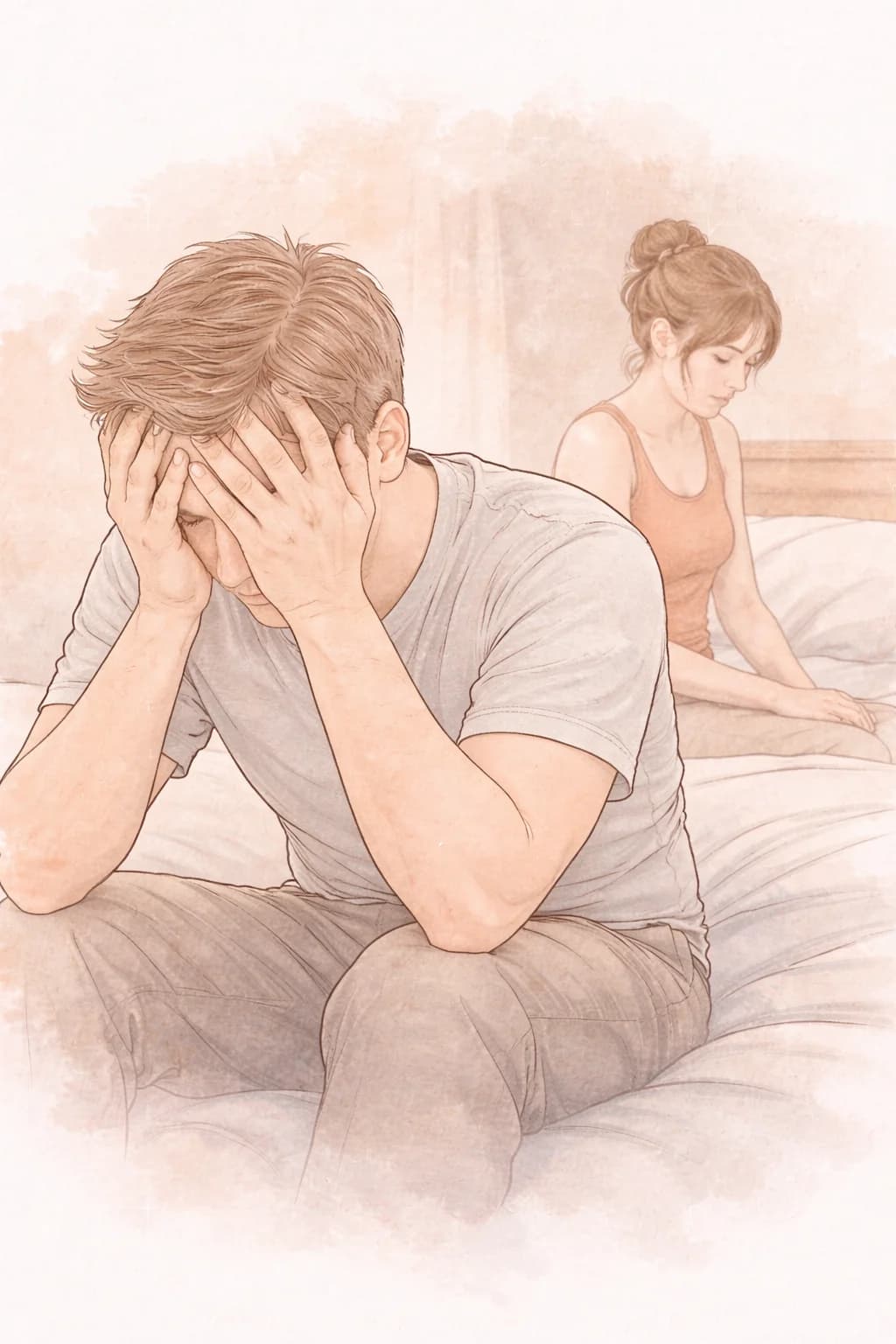
In many relationships, conflict quickly becomes a battle between two wounded positions. "You hurt me." "No, you misunderstood me." "You always do this." "You never listen."
And just like that, the relationship stops being a place of connection and becomes a courtroom. Each person begins collecting evidence. Each person wants to be right. Each person wants their pain validated. Each person wants immediate relief.
But the question that protects a relationship is rarely: How do I prove my point?
It is much more often: What will bring me closer to my partner in this moment?
That does not mean suppressing your needs. It does not mean pretending you are not hurt. And it certainly does not mean accepting behavior that is cruel, dismissive, or harmful.
It means pausing long enough to notice that not every emotional reaction tells the full truth. It means recognizing that sometimes what hurts us is not only what happened, but also what it touched inside us.
The Difference Between Pain and Ego
One of the hardest truths in relationships is this: not everything that hurts us was meant as harm. And not every painful feeling means the other person has wronged us in the way we imagine.
Take the statement: "You hurt me."
Sometimes that statement is real, important, and necessary. But sometimes it is also tangled with assumptions, old wounds, personal sensitivities, unmet expectations, pride, fear, and ego. Because if a different person had experienced the very same action, they may not have felt hurt at all.
That matters. Not because your pain is invalid, but because it reminds us that our inner world plays a role in how we interpret what happens between us. Two people can hear the same tone of voice, receive the same text, or experience the same moment very differently.
This is why emotional responsibility matters so much in a healthy relationship. Before placing the full weight of blame on your partner, it is worth asking:
- What exactly am I feeling?
- What story am I telling myself about this?
- What old wound is this touching?
- Am I reacting only to the present moment, or also to something deeper?
That kind of inward reflection changes everything.
The Work of "You"
Every healthy relationship depends on two people being willing to know themselves. Your triggers are your responsibility. Your patterns are your responsibility. Your healing is your responsibility. Your ability to pause, reflect, and communicate clearly is your responsibility.
This is not about blame. It is about power. Because when you learn to go inward instead of reacting outward, you stop handing over full control of your emotional life to your partner.
You begin to notice when your fear of rejection is speaking. When your defensiveness is speaking. When your need to be right is speaking. When your younger, wounded self is rushing to the front.
And instead of letting that part take over the conversation, you breathe. You slow down. You ask yourself: What is really happening here? What do I actually need? What would help me respond rather than react?
That inner work is part of what makes love sustainable. If you find that the same arguments keep repeating, it may be a sign that something deeper is being activated - and that is where personal growth becomes relational growth.
The Work of "Me"
The same is true for the other person. Your partner also has an inner world. Their reactions also come from somewhere. Their silence, irritation, distance, neediness, or sharpness may not simply be about you.
They too bring their own history into the relationship. Their own fears. Their own insecurities. Their own longing to feel safe, respected, chosen, understood, and loved.
When both people are committed to self-awareness, something powerful happens. The relationship stops being a place where each person demands perfection from the other. It becomes a place where both people take responsibility for their own growth.
Instead of "Why are you like this?" it becomes "What is happening inside you right now?" Instead of "You need to fix this" it becomes "How can we understand this better together?"
This is where compassion grows. This is where maturity grows. This is where intimacy becomes possible.

The Work of "Us"
The us does not build itself. It is built every time two people choose connection over reactivity, curiosity over assumption, presence over performance, responsibility over ego.
The us is strengthened when both people learn how to pause before speaking from their most wounded place.
Sometimes the most loving thing you can do in a difficult moment is take one breath before responding. Not to avoid. Not to shut down. But to create space.
A moment of silence can interrupt an argument before it hardens. A deep breath can stop a defensive reflex from becoming a hurtful sentence. A pause can help you remember that the person in front of you is not your enemy.
And in that pause, a better question can emerge: What will bring me closer to my partner right now?
Maybe it is honesty. Maybe it is softness. Maybe it is owning your part. Maybe it is listening instead of defending. Maybe it is saying, "I am feeling activated and I want to answer you with care, so give me a moment."
That is not weakness. That is relational strength.
Why Wholeness Matters in Love
Many people enter relationships hoping the other person will heal something in them. They want their partner to soothe their insecurity, repair their old wounds, prove their worth, calm their fears, and fill their emptiness.
And while love can absolutely be healing, no relationship can thrive when it is asked to carry the full burden of unfinished inner work.
The us becomes much healthier when each person is willing to become more whole within themselves. Not perfect. Not self-sufficient to the point of emotional distance. But grounded enough that they do not expect the relationship to constantly rescue them from themselves.
When two people each do their own inner work, they come into the us with more capacity. More ability to listen, to repair, to tolerate discomfort, and to stay open without collapsing into blame or control.
That is what allows a relationship to become a place of depth rather than just dependency.
Personal Responsibility Is Not Emotional Isolation
It is important to say this clearly: taking responsibility for your emotions does not mean you have to handle everything alone.
Healthy relationships still require care, empathy, accountability, and repair. If your partner says something cutting, ignores your bids for connection, repeatedly dismisses your feelings, or behaves in ways that damage trust, those things matter.
Personal responsibility is not about excusing harmful behavior. It is about making sure that when you respond, you do so from clarity rather than from pure emotional impulse.
It is the difference between "You hurt me, you always do this, you never care" and "What happened just now brought up pain in me. I want to talk about it in a way that helps us understand each other."
One attacks. The other invites. One protects the ego. The other protects the relationship.
How Strong Relationships Are Built
Strong relationships are not built by two people who never get triggered. They are built by two people who learn what to do when they are.
They learn how to go inward before going outward. They learn how to notice their own stories before turning them into accusations. They learn how to sit with discomfort without needing immediate gratification. They learn how to ask not only "What am I feeling?" but also "What does our relationship need from me right now?"
That is the shift from me-centered love to relationship-centered love. And that is where real growth begins.
Because love is not only about being understood. It is also about becoming someone who knows how to love well.
A Final Thought
Every relationship has three sides: You. Me. And us. You matter. Your partner matters. But the space between you matters too.
That shared space asks for self-awareness, humility, breathing before reacting, less ego and more truth, and personal responsibility - not because feelings do not matter, but because they matter enough to be handled with care.
Sometimes protecting a relationship means saying the hard thing. Sometimes it means taking ownership of your part. Sometimes it means being honest about your hurt. And sometimes it means pausing long enough to ask: What will bring me closer to my partner in this moment?
That question alone can change the direction of a conversation. And over time, it can change the direction of a relationship.
Frequently Asked Questions
It means a healthy relationship includes three important parts: each individual person and the shared connection between them. The relationship itself needs care, attention, and emotional responsibility from both partners.
Personal growth helps each partner understand their own triggers, patterns, and communication habits. When both people do their own inner work, they show up with more maturity and capacity for connection.
By pausing before reacting, taking responsibility for their own emotional responses, listening with curiosity, repairing after conflict, and asking what will bring them closer. If this feels difficult, couples counseling can help you build these skills together.
Not at all - sometimes it is important and true. But it helps to explore what exactly felt painful and whether old wounds or assumptions may be shaping your reaction. This creates more honest and constructive communication.