The Space Between
When the Same Fight Keeps Coming Back
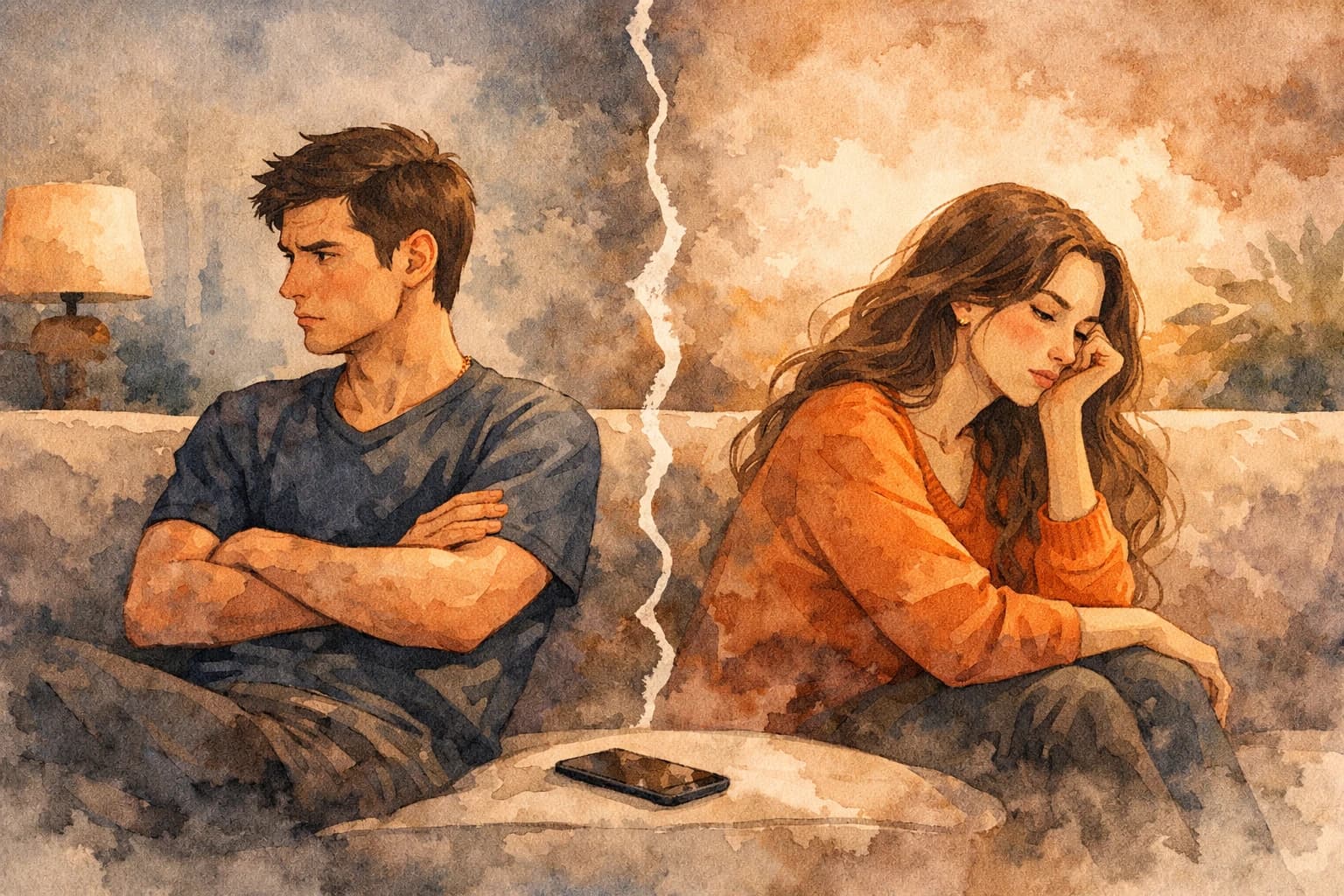
Many couples seek counseling because they feel trapped in the same argument again and again. The topic may change slightly, but the emotional pattern stays the same. One person raises a concern, the other feels criticized and becomes defensive, the first pushes harder because they feel unheard, and the second shuts down, argues back, or walks away.
Before long, the conversation is no longer about solving the problem. It becomes about self-protection.
This is one of the most common patterns in relationships. It can happen around parenting, money, intimacy, chores, family boundaries, trust, or even small daily frustrations. Over time, the original issue matters less than the cycle that takes over between the couple.
In CBT couples counseling, we look closely at that cycle.
What Repeated Arguments in Relationships Usually Mean
Repeated arguments do not always mean the relationship is failing. More often, they mean the couple is stuck in a pattern they do not yet know how to interrupt.
That distinction matters.
Many couples assume that if they are having the same disagreement repeatedly, something must be deeply wrong. But research on long-term relationships suggests something more nuanced: many relationship problems are not completely "solved" once and for all. John Gottman's research has described about 69% of relationship problems as perpetual, meaning they tend to recur over time in one form or another. The goal is not to eliminate all disagreement. The goal is to learn how to handle it in a healthier way.
Why the Pattern Becomes Bigger Than the Problem
Couples often think they are fighting about the surface issue. In reality, they are usually reacting to what the issue seems to mean.
A comment like, "You forgot again," may be heard as:
- "You do not appreciate me."
- "You think I am failing."
- "I can never get this right."
- "You do not care about what matters to me."
Once those meanings kick in, the emotional reaction becomes faster and more intense. People stop responding to what was actually said and start reacting to what they believe it means.
This is where recurring relationship conflict becomes so painful. The argument is no longer just about the dishes, the late text, the missed errand, or the awkward comment. It becomes about rejection, failure, criticism, abandonment, disrespect, or not mattering.
That is why the same argument can feel so charged, even when the trigger seems small.

How CBT Couples Counseling Helps Interrupt the Cycle
CBT couples counseling helps partners slow the process down and understand what is happening step by step.
Instead of asking only, "Who was right?" we ask:
- What was the trigger?
- What meaning did each person attach to it?
- What feeling came next?
- What behaviour followed?
- How did that behaviour affect the other person?
That shift moves the conversation away from blame and toward understanding.
CBT also helps couples identify automatic thoughts that fuel repeated arguments, such as:
- "Ignoring me means you do not love me."
- "Needing space means you are leaving me."
- "Criticism means I am not good enough."
- "Disagreement means our relationship is broken."
These thoughts can feel completely true in the moment, but they are often shaped by stress, old wounds, fear, or habit rather than by the full reality of what is happening. When couples begin to notice these patterns, they become less controlled by them.
If you recognize these dynamics in your relationship, couples counseling can help you and your partner identify and interrupt the cycle in a safe, structured space.
Why Happy Couples Can Still Disagree Often
Healthy relationships do not depend on never arguing. In fact, strong couples often still disagree about important things. What tends to make the difference is not the absence of conflict, but the way conflict is handled.
Research emphasizes that on average 69% of conflicts are ongoing and technically "unsolvable" without real compromise. Relationship stability is shaped less by "solving everything" and more by learning how to manage differences without contempt, chronic defensiveness, or emotional disconnection.
So how can couples disagree and still be happy?
Happy couples are not couples without tension. They are often couples who know how to stay connected inside tension. They are better able to pause without abandoning the conversation, speak without attacking, listen without immediately preparing a defence, and repair after difficult moments instead of letting resentment build.

What Helps Couples Stay Connected During Conflict
When couples are stuck in the same argument again and again, the goal is not to say everything perfectly. It is to interrupt the old pattern early enough that the conversation does not turn into another injury.
A few simple shifts can make a real difference:
Start Softly
The first few sentences of a conversation often shape everything that follows. A softer opening such as, "Can I share something that has been sitting with me?" usually lands very differently from criticism, accusation, or built-up frustration.
Use "I" Language Instead of Blame
Saying, "I felt alone in that moment," is usually far easier to hear than, "You never show up for me." It keeps the focus on your inner experience rather than turning the other person into the problem. Learning to speak openly about difficult topics - whether it is about intimacy, needs, or frustration - is one of the most valuable relationship skills.
Listen to Understand, Not to Prepare Your Defence
Most couples listen while internally building a response. Slowing down enough to really hear what your partner means can change the entire tone of a conversation. Often what is needed most is not agreement, but the feeling of being understood.
Do Not Fix Too Quickly
When someone feels hurt, they are not always asking for a solution. Often they want acknowledgment before strategy. Jumping straight into fixing can make a person feel bypassed. Sometimes the most helpful response is simply, "I can see why that hurt."
Stay Away From Blame and Scorekeeping
Once the conversation becomes about who is worse, who started it, or who has done more wrong over time, connection usually collapses. Try to stay with the present moment and the specific hurt instead of bringing in a whole case file.
Name the Feeling Underneath the Reaction
Anger is often easier to show than hurt, fear, shame, or disappointment. But conflict usually changes when one person is able to say, "What is underneath this is that I felt unimportant," or, "I think I am reacting so strongly because I felt dismissed."
Take a Pause Before Things Escalate Too Far
Some couples wait too long to pause, and by then both people are already flooded. A short break can help, but only if it is done with care. "I want to continue this, but I need ten minutes to calm down" feels very different from walking away or shutting down.
Look for the Need, Not Only the Complaint
Under many repeated arguments is a longing that has not yet been said clearly. The complaint may be about chores, lateness, tone, or sex, but underneath it there is often a need for reassurance, partnership, tenderness, appreciation, or safety.
Learning How Not to Lose Each Other Inside Conflict
Repeated arguments are exhausting. They can make people feel hopeless, lonely, and emotionally far apart. But repetitive conflict does not automatically mean the relationship is broken.
Very often, it means the couple needs help seeing the pattern clearly.
The goal of couples counseling is not to stop all disagreement. The goal is to create a different kind of disagreement - one where both people feel safer, clearer, and more able to remain connected even when something is hard.
Sometimes the most important part of counseling is not solving one argument once and for all. It is learning how not to lose each other inside it.
Frequently Asked Questions
A normal disagreement may feel uncomfortable, but it still leaves room for repair and movement. A harmful pattern tends to feel repetitive, emotionally loaded, and hard to interrupt. If the same roles appear every time and the argument ends with more distance rather than clarity, it is likely a pattern worth exploring.
Small issues often carry bigger meanings underneath them. A forgotten task may feel like neglect, a sharp tone like disrespect, a request for space like rejection. When partners react to what the issue seems to mean rather than the event itself, emotional intensity can quickly escalate.
This is very common. The partner who needs space should reassure the other they are not disappearing, and the partner who wants resolution may need to tolerate a short pause. A pause works best when it is time-limited, respectful, and includes a clear plan to return to the conversation.
If the same conflict keeps returning, if conversations regularly end in hurt or shutdown, or if you feel stuck in a pattern you cannot break on your own, couples counseling can help you understand the cycle and learn new ways to communicate.