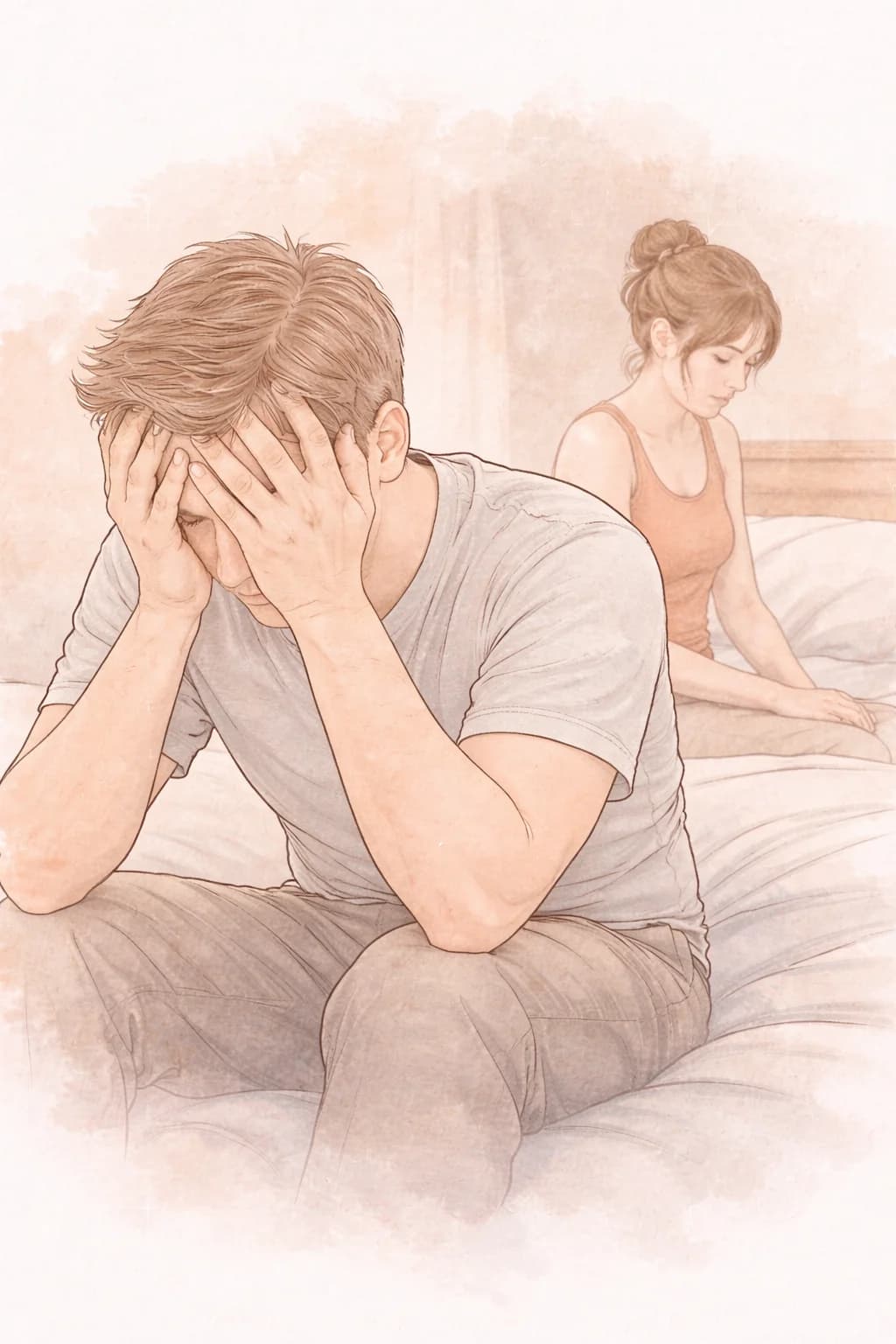
The Space Between
Understanding Mismatched Libido in Relationships - and How to Reconnect
One of the most common struggles couples face is a difference in sexual desire. One partner wants sex more often. The other wants it less - or not at all. Over time, this gap can begin to feel painful and personal.
The partner with higher desire may feel rejected, unwanted, or confused. The partner with lower desire may feel pressured, inadequate, or overwhelmed. What starts as a difference in libido can quickly turn into a cycle of tension, hurt, and misunderstanding.
But here is the important truth: a desire gap is not a sign that something is broken in the relationship. It is a signal - one that, when understood properly, can actually lead to deeper connection.
Why the Desire Gap Feels So Personal
When desire is mismatched, most couples instinctively interpret it through an emotional lens.
- "You do not want me."
- "You are not attracted to me anymore."
- "I am too much."
- "I am not enough."
These interpretations feel real - but they are often inaccurate. In reality, differences in sexual desire are extremely common, especially in long-term relationships. The problem is not the gap itself. The problem is how couples understand and respond to it.
Not All Desire Works the Same Way
One of the most important - and least known - concepts in sex therapy is that there are different types of desire.
Some people experience spontaneous desire. This means desire appears naturally, like a spark: "I feel like having sex."
Others experience responsive desire. This means desire emerges only after something has already begun - touch, closeness, emotional connection, or physical arousal. "I did not feel like it at first, but then I got into it."
Neither is better. Neither is wrong. But when one partner is spontaneous and the other is responsive, it can create a misunderstanding. One thinks: "If you wanted me, you would feel it like I do." The other thinks: "I just need more time, safety, or connection to get there."
Without this understanding, the difference becomes personalized instead of contextualized.

The Pressure-Withdrawal Cycle
Many couples unconsciously fall into a pattern that looks like this:
The higher-desire partner reaches out -> the lower-desire partner feels pressure -> they pull away -> the higher-desire partner feels rejected -> they pursue more intensely -> the cycle repeats.
Over time, both partners feel stuck. One feels unwanted. The other feels overwhelmed. And intimacy becomes something charged rather than natural.
Breaking this cycle is not about increasing or decreasing desire. It is about changing the pattern between the partners. If this dynamic feels familiar, sex counseling can help both partners understand and interrupt the cycle in a safe, structured space.
What Actually Lowers Desire?
Low desire is often misunderstood as a fixed trait - "this is just how I am." But in reality, desire is highly sensitive to context. Understanding that sexual difficulties are rarely just about sex can help reframe the conversation entirely.
Some of the most common factors that reduce desire include:
Emotional Disconnection
When partners feel unseen, unappreciated, or emotionally distant, desire naturally decreases.
Stress and Exhaustion
The nervous system needs space and safety to access arousal. Chronic stress shuts that down.
Pressure and Expectation
When intimacy starts to feel like an obligation, desire often disappears.
Resentment
Unresolved conflict, imbalance in responsibilities, or feeling taken for granted can quietly erode attraction.
Body Image and Self-Perception
Feeling uncomfortable in one's body can create distance from physical intimacy.
Life Transitions
Pregnancy, parenthood, illness, hormonal changes, and aging all impact desire in natural ways.
In many cases, low desire is not the problem. It is the result of something else happening in the system.
What About the Partner Who Wants More?
The higher-desire partner is often misunderstood as simply "needy" or "too sexual." But more often, what they are seeking is not only sex. They are seeking connection, validation, closeness, and reassurance. Sex becomes the language through which they try to access those feelings.
When that bid for connection is repeatedly unmet, it can lead to frustration, hurt, self-doubt, and increased pursuit or pressure. Understanding this softens the dynamic. It becomes less about "too much" and more about unmet emotional needs.
Reframing the Desire Gap
Instead of asking "Who is the problem?" a more helpful question is: "What is this pattern showing us about the relationship?"
The desire gap often points to something deeper:
- A difference in emotional needs
- A breakdown in communication
- A mismatch in how connection is initiated
- Unspoken expectations or beliefs
- Accumulated stress or disconnection
When couples begin to explore these layers, the gap starts to make sense. And once it makes sense, it becomes something that can be worked with - rather than fought against.
How Couples Begin to Reconnect
Closing the desire gap is not about forcing desire to match. It is about creating conditions where desire can naturally re-emerge. Some of the most effective shifts include:
Reducing Pressure
When the expectation of sex is removed, safety increases - and desire often follows.
Rebuilding Emotional Connection
Small moments of closeness, appreciation, and presence create the foundation for intimacy.
Understanding Each Other's Desire Style
Learning how each partner's desire works changes everything.
Creating Space for Non-Sexual Touch
Touch without expectation allows the body to reconnect gradually.
Improving Communication
Being able to speak openly about needs, fears, and experiences reduces misunderstanding and builds trust.
These are not quick fixes. They are shifts in how the relationship functions.
Desire Is Dynamic, Not Fixed
One of the most important things couples can understand is that desire is not static. It changes over time. It responds to context. It reflects the state of the relationship.
The goal is not to return to how things were at the beginning. The goal is to create a new kind of intimacy that fits who you are now.

A Different Way Forward
When couples stop seeing the desire gap as a problem to solve and start seeing it as a pattern to understand, something important changes. There is less blame, less pressure, more curiosity. And from that place, new possibilities begin to open.
Because the desire gap is not the end of intimacy. It is often the beginning of a deeper, more honest, and more connected relationship - if couples are willing to explore what it is really trying to show them.
Frequently Asked Questions
Start outside the bedroom and outside a painful moment. Speak about your experience rather than their failure - for example, I miss feeling close to you lands better than You never want me. The goal is to create safety, not defensiveness.
Absolutely. Love and desire are connected but not the same. Many people feel strong love and emotional attachment while struggling with libido because of stress, hormonal changes, burnout, or emotional overload. Lower desire does not mean lower love.
That usually makes intimacy feel even more loaded. It helps to build a new language around intimacy during neutral moments too - what helps you feel close, what makes touch feel safe, what turns you off emotionally. If starting these conversations feels difficult, working with a sex counselor can help.
Yes. The desire gap often reveals deeper patterns that were already there - unspoken resentment, poor communication, or emotional disconnection. When approached with honesty and curiosity, it can become an opening into a more compassionate and emotionally connected relationship.